

8 min read
How to Get Started With a Commercial Flex Space Business

Kevin Weaver founded Tristate Buildings with a simple idea: getting the space you need shouldn't be a headache.
More than 35 years later, that idea still drives how Tristate works. Kevin and his crews have built ag buildings, horse barns, commercial buildings, custom garages and more across the mid-Atlantic. Along the way, Tristate became known for going bigger than most builders will, with buildings up to 100 ft wide and 30 ft tall.
Kevin talks the way he builds. He's direct and doesn't hide the details. He'd rather tell you the real cost up front than surprise you halfway through a job. That's why every Tristate building comes with a Lifetime Workmanship Warranty and a detailed quote before any work starts.

- Commercial flex space is an open building split into units that small businesses rent for shop space, storage, or a showroom.
- Land and zoning come first. Talk to your township before you buy, not after.
- Most first-time investors finance through a commercial lender, so get your numbers on paper early. If you don't have a lender, we can recommend one.
- Demand is strong. We've seen investors lease units before the building was even finished.
- Post-frame gives you wide-open interiors you can re-divide as tenants change, and it goes up fast.
I get a lot of calls from people who've been thinking about flex space for a while. Maybe they run a business and own a few acres. Maybe they've got some savings and want something steadier than the stock market. They like the idea. They just don't know where to start.
That's what this post is for. If you're still figuring out how big to build, we covered that in How to Size and Design a Profitable Commercial Flex Space. This one is about the steps before that, and the steps that get you to ground-breaking.
What is commercial flex space?
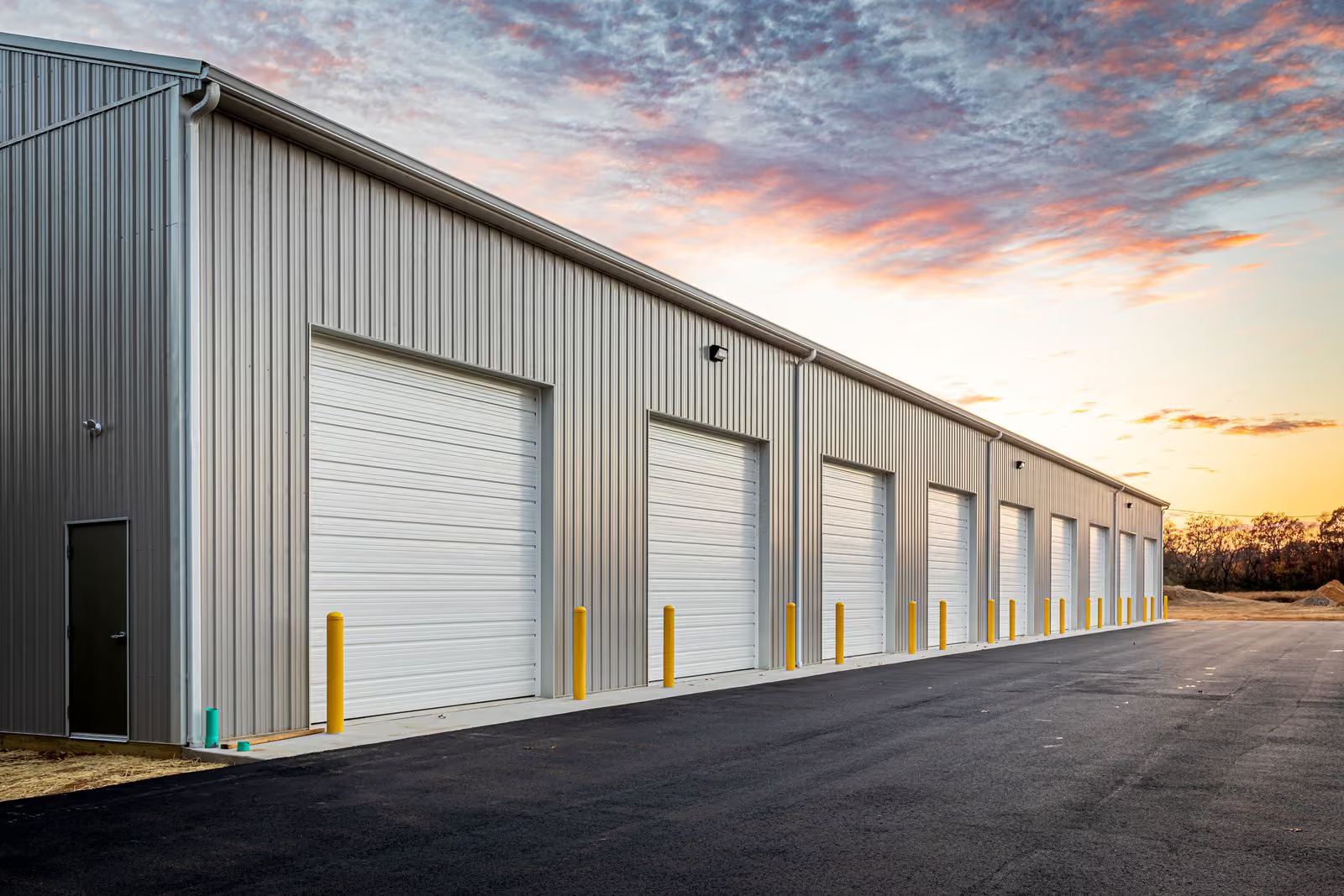
Commercial flex space is a building with a big, open interior that's split into units. Each unit usually gets its own overhead door and walk door. Some get a small office or restroom. Tenants use the space however their business needs it.
Picture a long building with a row of overhead doors down one side. Each door opens to a separate unit with its own tenant and its own lease. You own one building, but several businesses pay you rent.

That flexibility is the whole point. When one tenant moves out, the next one can move in without a major remodel. We go deeper on the money side in Why Are Commercial Flex Spaces Such Profitable Business Investments?
Who rents flex space?
The tenant list is long, which is a big reason flex space works. Here's who we see renting most often:
- Contractors. Landscapers and trades like plumbers and electricians. They need a place to park trucks and keep equipment out of the weather, and a lot of them are growing fast.
- Light manufacturing. Small fabrication or woodworking shops that need good power and room to move.
- Automotive. Window tinters and other small auto shops that need a clean bay with a big door.
- Storage. Businesses with extra inventory or equipment, plus folks looking for a dry spot for a boat or RV. Thinking storage-first? See what to consider before investing in a flex storage facility.
- Showrooms. Companies that need a front room to show customers their product, with work or storage space behind it.
A lot of these businesses are stuck in a garage or a building they've outgrown. They want something better, and there usually isn't much of it around.
Your Path to Ground-Breaking
- Find the land. Easy access, room to turn a truck, space for parking and stormwater.
- Check zoning. Confirm rental units are allowed, plus setbacks, parking and approvals.
- Line up financing. Talk to a commercial lender with a detailed, line-by-line quote.
- Design the building. Size the units and doors around your tenants.
- Start the lease-up. Talk to tenants before the building is finished.
Similar Articles
View All
Start with the land
Good flex space sits where tenants can get to it easily. Think about the drive in, not just the price of the lot. Can a pickup with a trailer pull in and turn around? Is it close to a main road? Will your future tenants' customers find it?
You'll also want room to work with. Your building needs parking and a drive lane. You'll need space for stormwater management, too. If you might add a second building later, buy enough ground for it now. It's a lot easier than trying to buy the lot next door in five years.
If you already own land, that's a head start. Just don't assume it's ready to build on until you've checked the next part.
Check zoning before you buy
This is the step that catches people. Every township handles commercial buildings a little differently. A piece of land can look perfect and still be zoned for something that won't allow rental units.
Call your township or municipal office early. Ask what the parcel is zoned for and whether rental units are allowed. Then ask about setbacks and parking rules. Ask what the approval process looks like, too, because some places need a land development plan and that takes time.
If you don't know where to start, that's fine. We've built across the five-state mid-Atlantic area for a long time, and we can point you in the right direction.
Line up your financing
Most first-time flex investors go through a commercial lender or a local bank that does commercial real estate loans. Commercial loans work differently than a home mortgage, so expect the lender to ask for more. If you don't have a lender yet, we can recommend one.
Before that meeting, put together a simple plan. Know roughly what the land and building will cost. Then figure out what each unit could rent for in your area. A detailed quote from your builder helps here. Lenders want real numbers, not guesses. We break our quotes down line by line, so you can hand the bank something solid.
Every deal is different, so talk to your lender and your accountant before you sign anything.
Plan your lease-up
Here's the good news. Demand for flex space is strong right now. One of our clients built multiple units and had them rented out before construction was even finished.
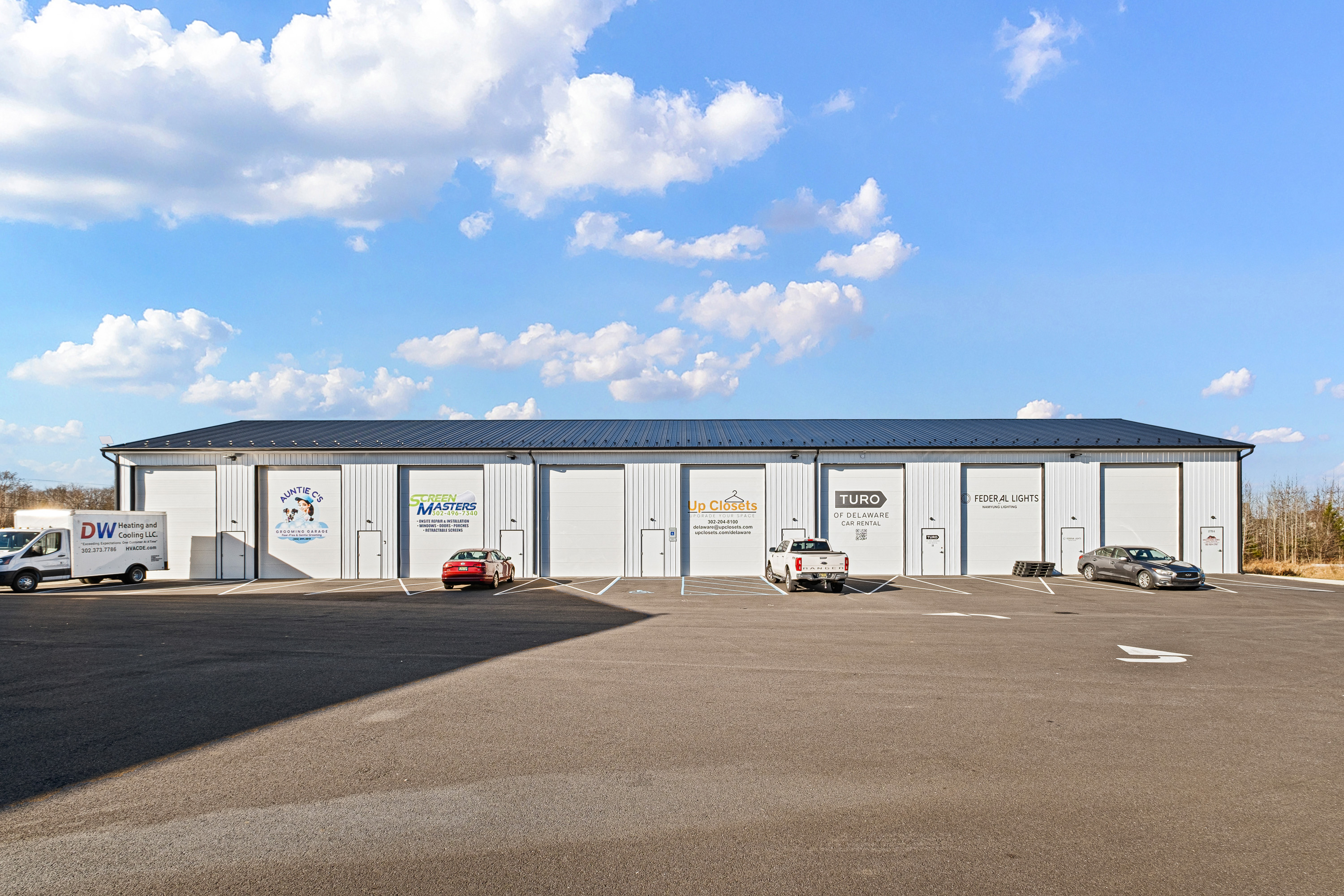
You don't have to wait for the ribbon cutting to find tenants. Once you have a site and a plan, start talking. Put a sign on the property. Let local contractors and business owners know what's coming. A commercial real estate broker can help, too, especially for your first building.
The faster your units fill, the faster your building starts paying for itself.
Similar Project

Commercial Flex Space
 Delaware
 70x140x18
Why post-frame works for flex space
A flex building has one job. It has to work for whoever rents it next. Post-frame is a great fit for that.
The posts sit on the outside walls and the trusses span the whole width. That means no columns in the middle of your units. Tenants can back a truck in or line up shelving without working around posts. When a tenant moves out, you can move a partition wall and re-divide the space without touching the structure.
Width and height matter more than most first-time investors expect. Most post-frame builders top out around 70 to 80 feet wide and 20 to 22 foot ceilings. We build up to 100 feet wide with 30 foot ceilings. That extra room lets you fit deeper units or bigger doors. It also brings in tenants who need height for equipment or tall racking. We explain more in High and Wide: How to Raise the Roof on Your Business's Potential.
Post-frame also goes up quickly. A shorter build means you start collecting rent sooner. If you want to know what drives the price, we break it down in Factors That Affect Storage Unit Construction Costs.
From idea to ground-breaking with Tristate
You don't have to have it all figured out before you call us. Most people don't.
We help with the whole project. We'll sit down with you and talk through what you want the building to do. Then we'll design flex space building plans around your land and your budget. You'll get a detailed quote that shows where every dollar goes, so there are no surprises later.
We can also be a resource for the parts that aren't building. If you have questions about the site or the approval process, ask. If we don't know, we'll get you an answer. And if we're not the right fit for your project, we'll help with a referral.
Once the shovels are in the ground, our crews handle the build, and we back our work with a lifetime workmanship warranty.
We've been building post-frame commercial buildings for over 35 years. Plenty of our flex space clients came to us with the same questions you have right now. If you're ready to see what your first building could look like, let's talk. Get your free quote today.
Tristate Buildings has built profitable post-frame commercial buildings in PA, MD, VA, DE, and NJ for over 35 years. We offer a Lifetime Workmanship Warranty on every nail, seam, and screw of your building, as well as the assurance that comes from working with specialty crews trained beyond industry standards. Reach out today to take the first step toward your dream building—with a friendly, knowledgeable team member who cares about you and your success.
Similar Articles
View All
Financing Your Dream Building
Finding the right contractor can mean the difference between getting a building you love and spending a bunch of money on a project you later regret. But that doesn’t mean it needs to be a difficult decision.
See options