

.jpg)
- Flex spaces can serve a wide mix of tenants, including tradespeople, e-commerce businesses, storage companies, and manufacturers, so they stay rentable as the market shifts.
- Investors like flex buildings for their stable occupancy, longer commercial leases, and lower operating costs.
- Simple designs mean faster construction, lower labor costs, and a quicker return on investment.
- Durable materials and predictable expenses keep maintenance and risk low.
- Before you build, check zoning, local tenant demand, and infrastructure, and choose a contractor with real commercial experience.
If you’ve paid any attention to commercial property trends these past years, you’ve likely noticed one segment rising faster than most: commercial flex spaces.
Commercial flex spaces have become a favorite for investors and developers alike. As an investment vehicle, these structures answer a fundamental question for those interested in long-term profits. Namely, how do you build something that stays profitable no matter how the market shifts?
As you’ll see, flex storage is a simple, common-sense solution to this age-old problem. And as an investment property offering adaptability, predictable returns, and construction efficiency, you might be investing in one of your own before too long.
Let’s break it down.
What Makes Flex Spaces So Versatile?
At the heart of the commercial flex space demand is versatility.
Unlike single-purpose buildings, a flex facility can easily serve tradespeople, e-commerce businesses, storage companies, manufacturers, hybrid workplaces, and more.
This adaptability begins in the initial planning stage. A typical footprint is a wide-open interior paired with customizable office sections. With well-structured flex space building plans, developers can create units that shift between offices, warehouses, shops, truck storage, etc., with minimal renovations.
How Do Flex Spaces Strengthen Your ROI?
While one-off “big wins” have made fortunes, most investors want consistent returns—something flex storage spaces excel at providing.
Here’s how:
- Occupancy Stability: Flex spaces appeal to a wide range of business types, making vacancies shorter and easier to fill. So even when the market shifts certain industries out of favor, there will still be plenty of businesses looking for flexible operating space.
- Commercial Tenant Length: Generally speaking, commercial tenants stay longer than residential tenants. Commercial clients tend to invest in buildouts, prefer to establish customer routines, and benefit from predictable overhead. As a result, turnover is lower.
- Lower Operational Costs: Flex spaces often cost less to operate than other modern commercial buildings. This is the result of simplified HVAC zones, open layouts, easier-to-maintain exteriors, and minimal common-area complications.
In short, lower overhead and stable occupancy make commercial flex properties a win.
Similar Articles
View All
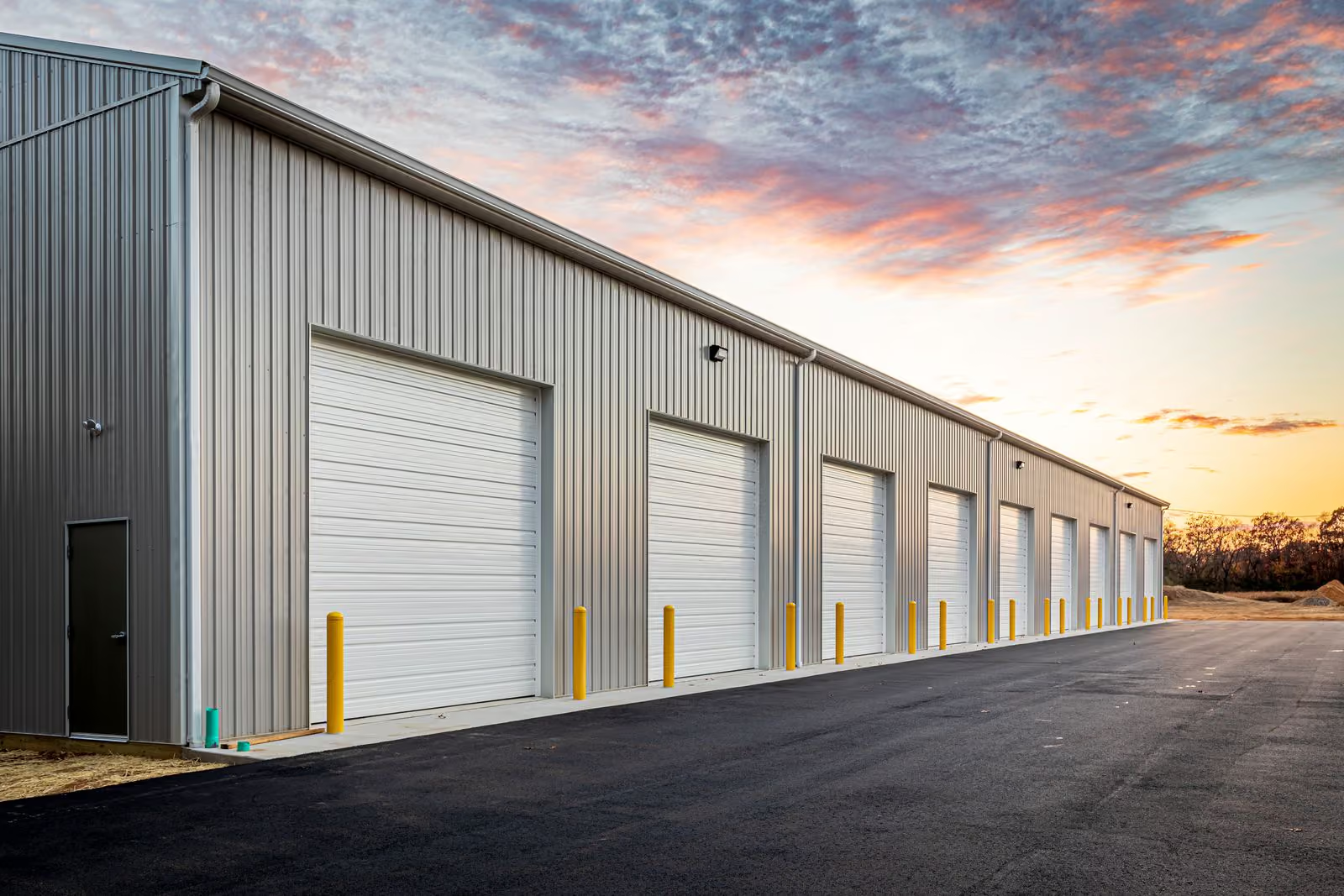
Why Are Flex Spaces Faster and Less Expensive to Build?
One of the main benefits of flex spaces—to both developers and investors alike—is construction efficiency.
A flex space’s streamlined commercial building design relies on structural steel, post-frame elements, and pre-engineered components that allow for rapid assembly and predictable timelines.
Because of their straightforward design, flex commercial building construction becomes a faster, smoother process. And with fewer frills, custom architectural challenges, and subcontractors needed, labor costs are lower—along with the potential for delays.
Bottom line: faster build times mean quicker ROIs for investors.
What Makes Flex Spaces Low-Maintenance and Low-Risk?
First, flex construction materials—steel framing, metal roofing, engineered concrete slabs—are durable and require minimal long-term care.
Second, operating costs are highly predictable. Insurance, utilities, maintenance, and repair budgets stay relatively steady—especially compared to buildings with high-traffic areas or sensitive interior finishes.
But perhaps most importantly, the flexible nature of these units reduces dependence on one type of tenant—meaning protection across multiple categories in any market.
How Do Flex Spaces Benefit a Changing Market?
Market shifts are unavoidable. Consumer behavior changes, supply chains fluctuate, and business operations evolve.
Flex spaces give investors the ability to stay relevant through market shifts without expensive retrofits. These buildings are built to adjust, and whether you’re renting out individual units or an entire building, flex spaces support reconfiguration with ease.
Similar Project

Commercial Flex Space
 Delaware
 70x140x18
What Should Investors Look for Before They Build?
Before investing in flex space development, consider these foundational basics:
- Location & Zoning: Ensure the property supports light industrial, commercial, or mixed-use operations
- Tenant Profiles: Identify which industries are growing in your region—will they benefit from flex spaces?
- Infrastructure: Confirm utilities, access roads, and parking logistics align with tenant needs
- Smart Building Practices: Finding experienced contractors who understand construction for commercial building is an absolute must
Is a Flex Space Right for Your Portfolio?
Flex spaces succeed because they’re built on simple truths.
Broad demand, combined with fast construction and predictable operating costs, is a safe bet for a strong investment.
Whether you’re expanding into a commercial portfolio or stepping into development for the first time, commercial flex space remains one of the most stable, adaptable, and profitable property types available today. Pair that investment with the right contractor, and it’s an experience you’ll want to replicate over and over again.
Tristate Buildings has been partnering with business leaders and investors for over 35 years. And in that time, the greatest driver of our success—besides the soundness of our clients’ commercial investments—has been the relationships we’ve built along the way.
So don’t wait on expanding your portfolio—especially when taking the first step toward a profitable commercial flex facility is so easy—and just a phone call away.
Financing Your Dream Building
Finding the right contractor can mean the difference between getting a building you love and spending a bunch of money on a project you later regret. But that doesn’t mean it needs to be a difficult decision.
See options