

5 min read
Wooden Post-Framing vs Steel Framing: Which is Right for My Building?

Kevin Weaver founded Tristate Buildings with a simple idea: getting the space you need shouldn't be a headache.
More than 35 years later, that idea still drives how Tristate works. Kevin and his crews have built ag buildings, horse barns, commercial buildings, custom garages and more across the mid-Atlantic. Along the way, Tristate became known for going bigger than most builders will, with buildings up to 100 ft wide and 30 ft tall.
Kevin talks the way he builds. He's direct and doesn't hide the details. He'd rather tell you the real cost up front than surprise you halfway through a job. That's why every Tristate building comes with a Lifetime Workmanship Warranty and a detailed quote before any work starts.
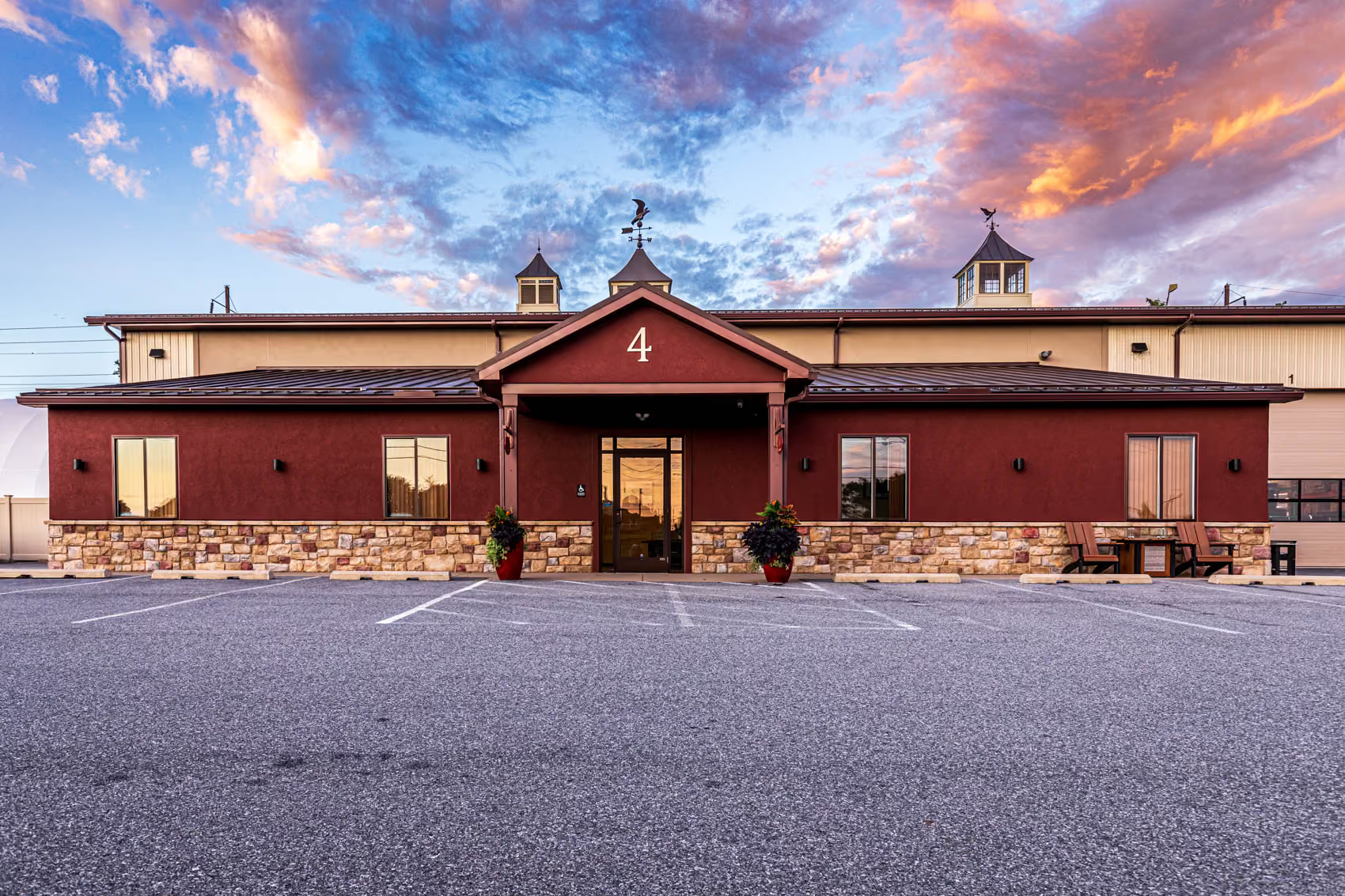
- Post-framing works well for workshops, manufacturing spaces, garages, mixed-use retail, and residential pole barns. Steel is better suited to massive warehouses, heavy industrial use, and multi-story buildings.
- Post-frame buildings are generally more energy efficient because wood doesn't conduct heat like steel and wider post spacing means fewer thermal bridges.
- Posts set deep in concrete carry the building's weight, so you get wide-open interiors without support columns breaking up the floor.
- Post-frame buildings can go up 20%–50% faster than steel, which means a quicker return on your investment.
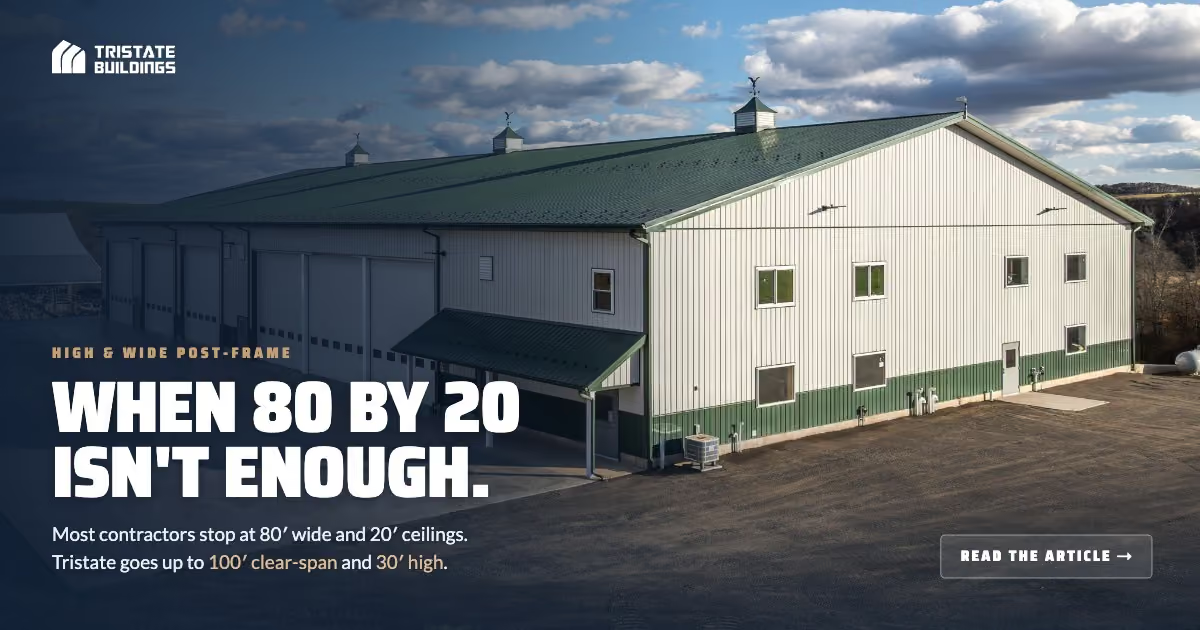
- Need a big building? Tristate builds post-frame structures up to 100 ft wide with ceilings up to 30 ft.
Looking to expand into your dream building? If so, your choice of framing style may matter more than you think.
Framing materials directly impact energy efficiency, long-term operational costs, functional space usage, and a building's structural integrity.
To help you make the right choice for your new building, we're breaking down the differences between two popular framing choices in commercial building design: post-framing and steel-framing.
Each has its place, but as you'll learn, one is more popular among small business owners looking to expand into more modern commercial buildings.
When is Post-Framing Used vs Steel Framing?
Post-framing is ideal for workshops, manufacturing spaces, garages, mixed-use retail buildings, and residential pole barns. As you'll learn, custom post-frame buildings are economical in both the short and long term and offer a host of benefits to businesses and individuals needing more space.
However, in terms of sheer strength, no commercially available framing material compares with steel. As a result, steel frames are generally better suited for massive commercial warehouses or heavy industrial applications, especially for taller buildings with multiple stories.
That being said, single-story buildings do well with post-framing, even structures requiring extremely wide clear spans. The key is working with post-frame building contractors skilled in high and wide construction (more on wider clear spans below).
Are Post-Frame or Steel-Frame Buildings More Energy Efficient?
Post-frame buildings are generally more energy efficient. That means lower long-term heating and cooling costs than steel structures.
Post-frame energy efficiency is a result of:
- Natural Insulation: Wood does not conduct heat well (especially when compared to steel, which conducts heat rapidly). Additionally, insulation packed between steel panels and a metal frame significantly lowers that insulation's R-value, or the measure of how well it protects against heat loss.
- Fewer Thermal Bridges: Thermal bridges are created when a material that passes through your insulation connects the interior and exterior of a building (ex: a building's frame). Post-frame buildings have fewer thermal bridges because posts are set 8–10 ft apart, compared to highly conductive steel beams set only 16–24 inches apart.
- Thicker Continuous Insulation: Another way to examine the issue of thermal bridging is by looking at your continuous sections of insulation. The wider the space between posts, the more continuous insulation a building has, increasing energy efficiency as a result.
It should be noted that while post-frame structures are generally more energy efficient, steel frame buildings can be properly insulated. However, this process is much more costly (often 2–3x more), as closed or open-cell spray foams must be used to seal off thermal bridges.
Similar Articles
View All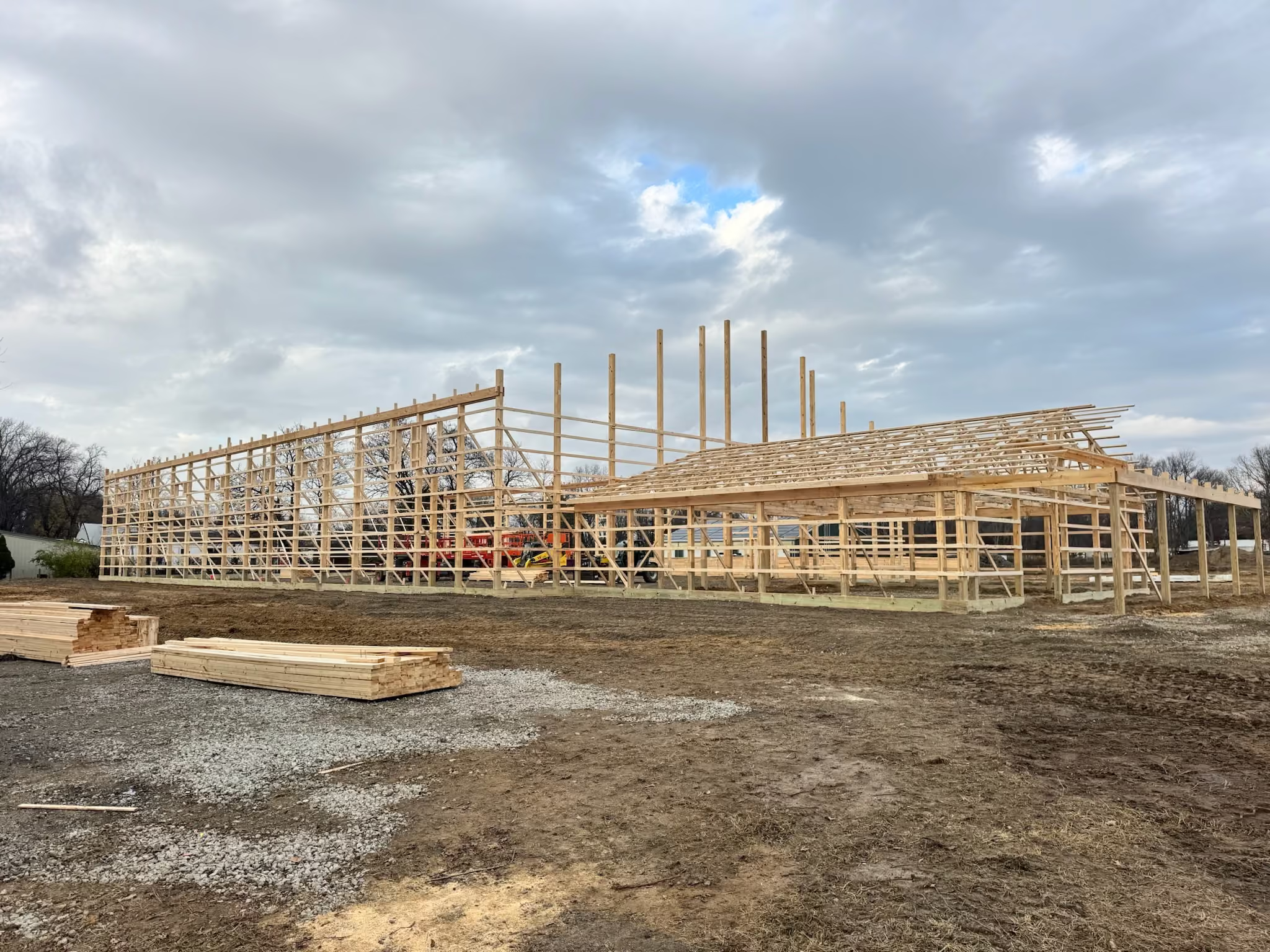
For Greater Interior Flexibility, Choose Post-Frame
Post-frame buildings are the best framing choice for flexible interior layouts, especially if you need wide-open clear spans for large equipment, workshops, or storage.
Post-framing supports a structure with large posts set 3–5 ft deep in the ground and encased in concrete. This allows the entire weight of the building to be supported without interior support walls or beams.
Steel frames, on the other hand, are built upon a pre-poured concrete slab. To help support the weight of the structure, interior load-bearing columns provide rigid support for the welded rafters and trusses above (large triangular roof supports). While these support columns do not take a tremendous amount of space, they do break up the uninterrupted floor plans post-frame buildings are capable of. This limits your equipment storage and movement capabilities, and sometimes even requires a larger building floor plan to be constructed.
Which is Faster to Build: Steel-Frame or Post-Frame?
As post-frame buildings require fewer materials than steel-framing for a building of equal size, they can be constructed 20%–50% faster, shaving weeks off your building timeline.
Additionally, adding drywall, electrical wiring, and plumbing is much simpler with a wood frame. Paneling and sheetrock are easily screwed into wooden girts and studs without requiring special clips or welding.
For these reasons, post-framing is generally viewed as the quickest construction method available… resulting in quicker ROI for investors, business owners, and even homeowners wanting to enjoy a space of their own.
.avif)


What if I Need a Very Large Building?
While steel is the preferred material for framing larger commercial applications, it should be noted that extremely tall and wide structures can also be built using post-framing. The key is choosing the right contractor.
While many post-frame builders cap their buildings at 70–80 ft clear span trusses and 20–22 ft ceiling heights, Tristate Buildings pushes beyond those limitations–offering 100 ft widths and ceiling heights up to 30 ft.
For more information on our tall and wide buildings, read: Tall and Wide—How to Raise the Roof on Your Building’s Potential.
Reach Out to Discuss Your Dream Building!
Dreaming of a new commercial building, agricultural storage facility, or residential outbuilding? Give Tristate Buildings a call today.
Our helpful team is ready to answer your questions, walk you through the entire construction process, and provide an initial design and detailed quote absolutely free.
And whether or not you decide to move forward with your structure, know this: We love meeting local business owners, farmers, and homeowners. Especially those passionate about creating a space they love and working together to build a better tomorrow.
So don’t wait—reach out today and let us know what you’re dreaming up.
Tristate Buildings has been providing post-frame buildings for agricultural, residential, commercial, and equestrian facilities for over 35 years. Your building comes backed by a Lifetime Workmanship Warranty and the assurance that comes from partnering with specialty crews trained beyond industry standards. Take the first step toward your dream building by connecting with a friendly, knowledgeable team member today. Let’s talk.
Financing Your Dream Building
Finding the right contractor can mean the difference between getting a building you love and spending a bunch of money on a project you later regret. But that doesn’t mean it needs to be a difficult decision.
See options