

5 min read
What Building Dimensions Do I Need for a Truck Shop?

Kevin Weaver founded Tristate Buildings with a simple idea: getting the space you need shouldn't be a headache.
More than 35 years later, that idea still drives how Tristate works. Kevin and his crews have built ag buildings, horse barns, commercial buildings, custom garages and more across the mid-Atlantic. Along the way, Tristate became known for going bigger than most builders will, with buildings up to 100 ft wide and 30 ft tall.
Kevin talks the way he builds. He's direct and doesn't hide the details. He'd rather tell you the real cost up front than surprise you halfway through a job. That's why every Tristate building comes with a Lifetime Workmanship Warranty and a detailed quote before any work starts.

- Plan for 16 to 18 feet of width per service bay so there's room to work on both sides of the truck.
- Bay length depends on the longest truck you'll service, now and as your business grows.
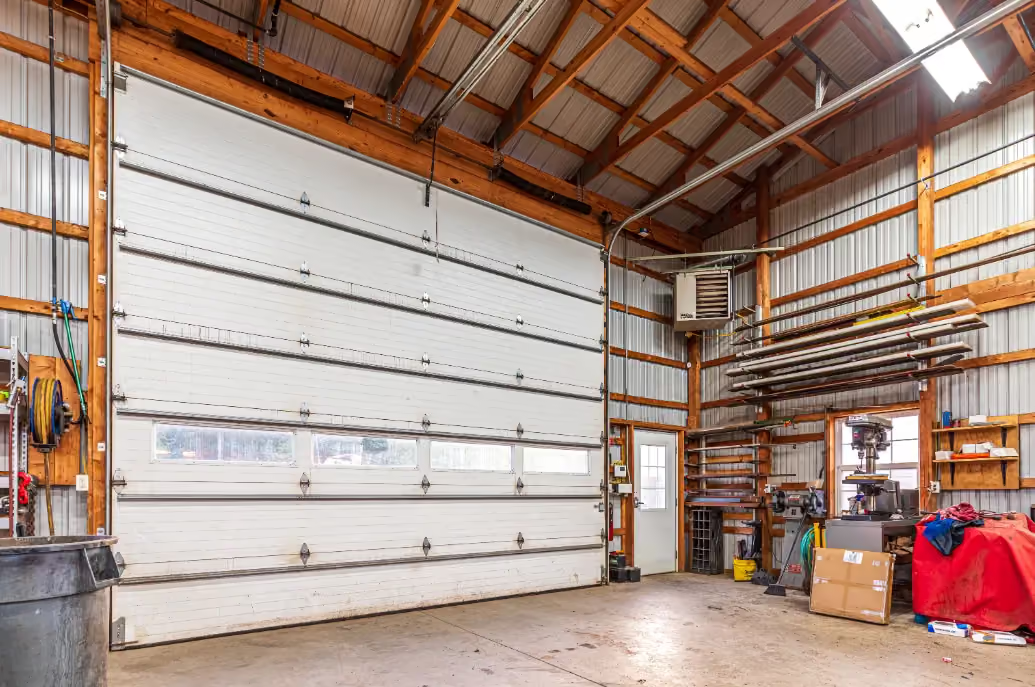
- You need 18 to 22 feet of clear overhead to raise a cab or dump bed, plus 2 to 4 more feet for lighting, plumbing, and HVAC.
- Overhead doors for semis should be at least 14 feet wide and 14 to 16 feet high.
- Plan aprons of 75 to 100 feet outside the bays so trucks can line up straight before pulling in.
- Most post-frame builders stop at 70 to 80 feet wide and 20 to 22 foot ceilings. A big truck shop usually needs more.
For truck shops, size matters. A lot.
Appropriate space means the difference between safe, efficient servicing and wasting precious time finagling large vehicles. Plus, you've got to get the trucks in the door. More than one regretful business owner has missed that.
Whether you're servicing sleek semis or your local rental fleet, this guide lays out the hardcore basics of sizing a truck shop. So give it a read.
You'll know what to ask your builder and end up with the exact shop size you need, even when most builders won't build big enough.
Let's make sure you've got enough wiggle room in the shop.
How to Size Your Truck Shop
For truck shops, standard automotive footprints won't cut it.
Follow these guidelines to get all the space you need.
Bay Width
Federal rules cap standard commercial truck width at 8.5 feet. Mirrors don't count toward that limit, and they stick out past the body on both sides.
So plan on service bays at least 16 to 18 feet wide. That gives your techs room to work on both sides of the truck, with space left over for toolboxes and part racks.
Bay Length
Commercial truck lengths range from 10 feet for light-duty box trucks to 70 to 80 feet for semi-truck and trailer combinations. Tractor cabs alone measure around 20 feet, and a standard trailer is typically 53 feet long.
When designing your bays, consider what types of trucks you'll be servicing, both right away and as part of your long-term growth plan.
As a general rule, add 4 to 6 feet of clearance at both the front and back of your longest truck. If you'll pull a full 70 to 80 foot tractor-trailer inside, that means bays of roughly 80 to 90 feet. If you only work on tractors or straight trucks, you can go a lot shorter.
Similar Articles
View All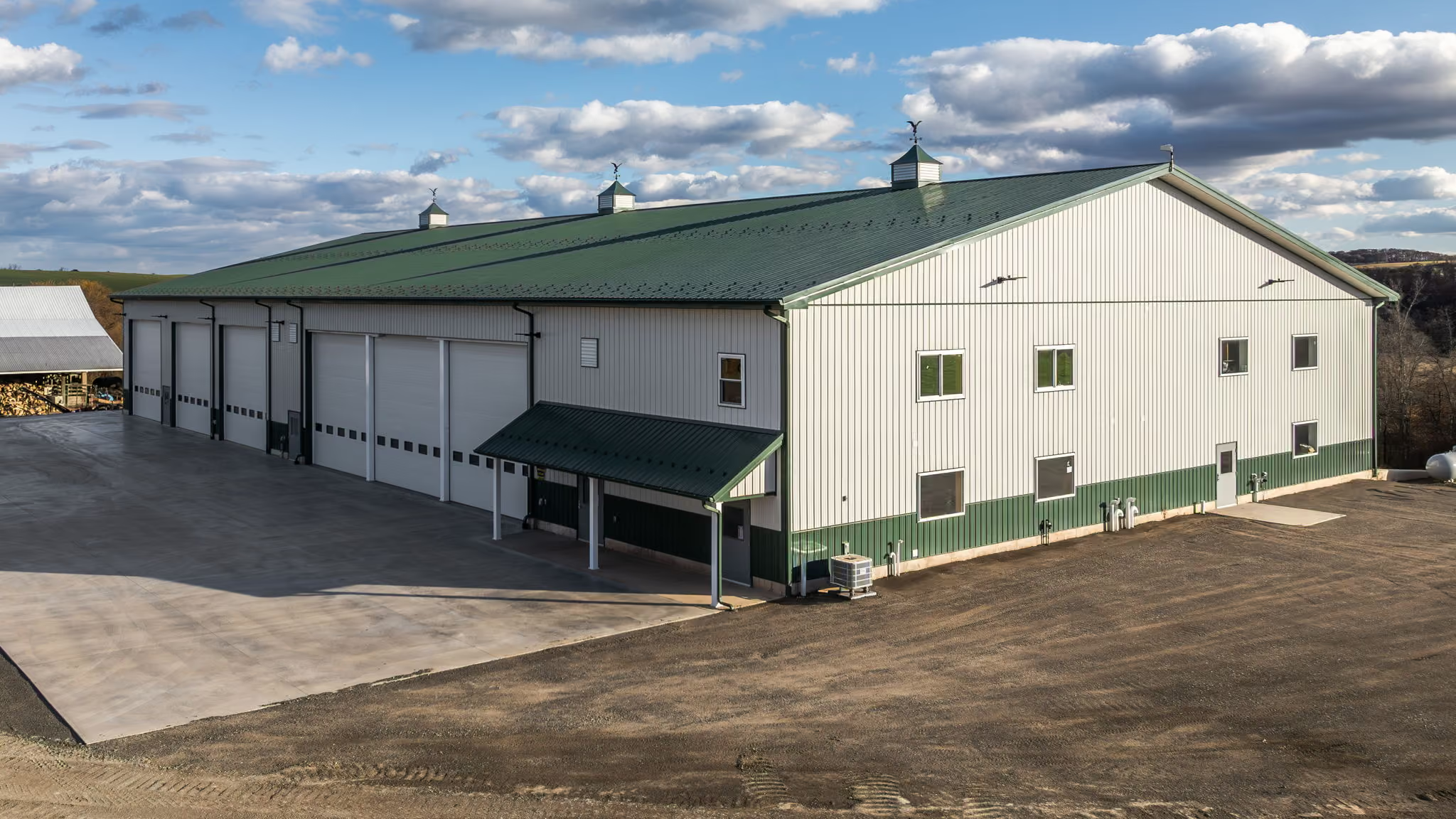
Ceiling Height
Semi-trucks stand about 13 feet 6 inches tall, and high-cube trailers run right up to that same mark.
To fully raise a truck cab or dump bed without hitting the rafters or the lights, you need a minimum of 18 to 22 feet of overhead clearance.
Your total overhead height should then be another 2 to 4 feet higher than that to house your building's plenum space. "Plenum space," you say? It's just the ceiling space where your mechanicals live, like lighting and HVAC.
Luckily, the engineer on your project will make sure your plenum space meets code. You don't need to worry about those details, but the extra clearance will affect your choice of builder.
We'll explain more on that in a moment. For now, just know it's important to find a contractor experienced in building taller structures than most post-frame or light commercial builders do.
Door Sizes
The math is simple:
A massive shop interior is 100% useless if you can't get the trucks in the door.
With standard semis standing 13 feet 6 inches tall and 8.5 feet wide before mirrors, overhead doors should be at least 14 feet wide and 14 to 16 feet high for safe clearance.
If you aren't servicing semis, the general rule is to make doors 2 to 3 feet wider and 1.5 to 3 feet taller than the actual vehicle. More wiggle room is always safer and more comfortable than less.
Turning Radius
It isn't part of your shop's interior, but don't overlook the concrete aprons leading into the shop.
Aprons and driveways outside bay entrances should extend at least 75 to 100 feet. That gives large trucks enough room to line up straight before pulling in.


How to Choose the Right Builder for Your Truck Shop
Knowledge can be power. Now that you know truck shop sizes and what to expect from the build, you're ready for an educated conversation with any builder you choose.
With the right partner, though, you don't need to know much. A knowledgeable, trustworthy contractor will be happy to walk you through the entire process of building a truck shop you love.
The key is choosing the right builder.
Here's how to make sure your contractor is up to the task:
- Experience: Look for builders with a track record of large commercial and manufacturing builds. The right builder will have an extensive project gallery ready to share with you.
- Reputation: Word travels fast, and customers don't protect shady contractors. Start with Google reviews, and if you like what you see, ask your contractor for referrals from recent projects.
- High & Wide: Most post-frame builders won't go beyond 70 to 80 foot widths and 20 to 22 foot ceilings. That simply won't do for larger truck shops. Find a builder who's ready to raise the roof on your shop's potential.
35 Years High & Wide and Counting
For over 35 years now, the Tristate team has helped business owners grow their business's potential. And we're ready to do the same for you.
Give us a call today to talk through the details of your dream truck shop. Our team knows commercial buildings of all types, and we're ready to build yours with up to 100 foot wide clear span trusses and 30 foot ceilings…
… Plenty of room to service the most mammoth commercial vehicles.
Not quite ready to hop on the phone? No sweat. Check out our Gallery page and gather some inspiration for how your shop might look. Then, when you're ready, give me a ring.
I look forward to hearing from you and bringing your dream building to life.
Kevin Weaver, Founder, Tristate Buildings
Ready to chat? Get Your Quote
Tristate Buildings has been building large post-frame and traditional-framed buildings across the five-state mid-Atlantic region for over 35 years. We offer a Lifetime Workmanship Warranty on every building, and you'll work with an experienced crew start to finish. Reach out today to take the first step toward your dream building with a friendly, knowledgeable team member who cares about you and your success.
Financing Your Dream Building
Finding the right contractor can mean the difference between getting a building you love and spending a bunch of money on a project you later regret. But that doesn’t mean it needs to be a difficult decision.
See options