

4 min read
A Practical Guide to Sizing Agricultural Equipment Storage Buildings

Kevin Weaver founded Tristate Buildings with a simple idea: getting the space you need shouldn't be a headache.
More than 35 years later, that idea still drives how Tristate works. Kevin and his crews have built ag buildings, horse barns, commercial buildings, custom garages and more across the mid-Atlantic. Along the way, Tristate became known for going bigger than most builders will, with buildings up to 100 ft wide and 30 ft tall.
Kevin talks the way he builds. He's direct and doesn't hide the details. He'd rather tell you the real cost up front than surprise you halfway through a job. That's why every Tristate building comes with a Lifetime Workmanship Warranty and a detailed quote before any work starts.

- Size your doors around your widest piece of equipment. Measure the full transport width with attachments, then add 2 ft of clearance on each side and 1 ft overhead.
- For total building width, add up all your equipment widths, plus 2–3 ft of clearance between each piece and against each side wall.
- Plan for the equipment you'll own in 5–10 years, not just what's in the shed today. Building bigger now usually costs less than adding a second building later.
- "I wish I had gone bigger" is one of the most common regrets farmers share after building.
- Tristate builds agricultural structures up to 100 ft wide with 30 ft ceilings, so you don't have to squeeze your operation into a smaller footprint.
Farmers all know it. When it comes to growing their businesses, the right building is everything. That's because workflow, storage capacity, and your ability to upgrade equipment down the line are all critical aspects of your farm's continued success.
In this article, you'll learn:
- How building size affects daily farm tasks
- Three guidelines for choosing the right building dimensions
- The biggest reason for buyer's remorse in post-frame construction (and why you don't have to worry about it with Tristate)
- The specs of an incredible agricultural facility built in Danville, PA
Let's begin by learning how to size your new building.
1. Plan Doors Around Your Widest Piece of Equipment
When designing a post-frame building for your farm, it's wise to start with door dimensions.
To determine door size, begin by measuring the widest piece of equipment you own. This means taking the true transport width, including attachments like planters, sprayers, disc harrows, toolbars, etc. With this measurement in hand, a good rule of thumb is to then add 2 ft of clearance on both sides of the equipment, with an additional 1 ft of clearance for overhead space.
So, to determine door openings:
- Measure the full width of your largest equipment
- Add 2 ft of clearance on each side
- Add 1 ft of overhead clearance
2. Calculate Full Building Width
To determine your full building width, add all of your equipment widths together, plus an additional 2–3 ft of clearance against each side wall and between each piece of equipment.
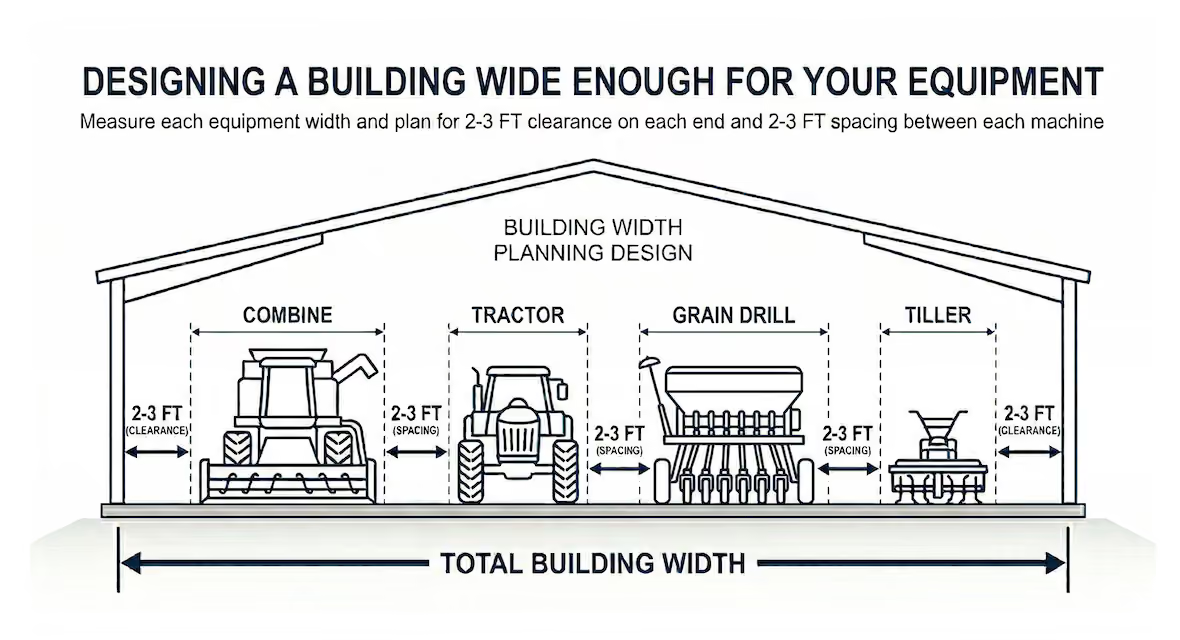
This number, combined with any added space for hay or grain operations, will give you your optimal width for ease of access, safe storage, and maneuverability.
Measuring your building in this way has a few distinct advantages:
- You don't need to double park large equipment
- Easier access allows for greater efficiency during chores
- Wider (rectangular) buildings are more attractive than square designs
Depending on the size of your operations, this is where some farmers get stuck, particularly those wanting very wide clear spans.
This is because most builders aren't prepared to tackle the engineering and construction demands of very wide clear spans. However, if you need a very wide building, you're in luck.
Tristate specializes in high and wide, with 100' clear spans for protecting even the most gargantuan farming operations.
Similar Articles
View All
3. Plan for Equipment Upgrades
If you're intentional about growing your farm, it's wise to plan long-term.
Over the last few decades, tractors, combines, and implements have only gotten larger. That trend reflects the need for efficiency in maintaining larger fields.
Therefore, before finalizing your building dimensions, consider the following:
- Will you be upgrading large equipment in the next 5–10 years?
- Are you planning to expand your farm's acreage in that time?
- How will your equipment lineup change due to aging, new technology, etc.?
A larger building now is most often cheaper than building a second structure in the years to come.
Thoughtful Agricultural Design at Pine Hurst Acres
A good example of thoughtful agricultural building design can be found at Pine Hurst Acres, a multi-generational family farm in Danville, PA.
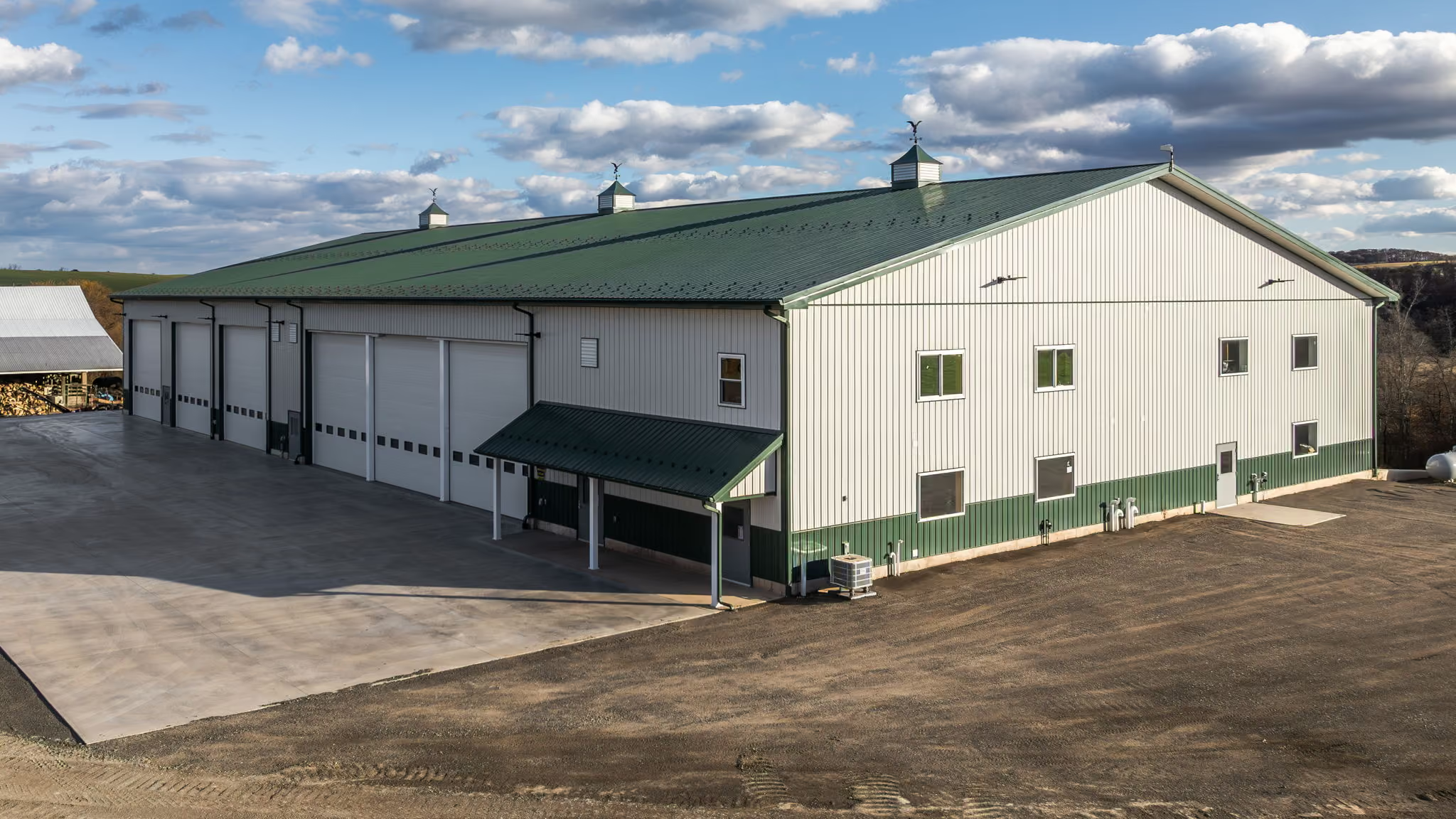
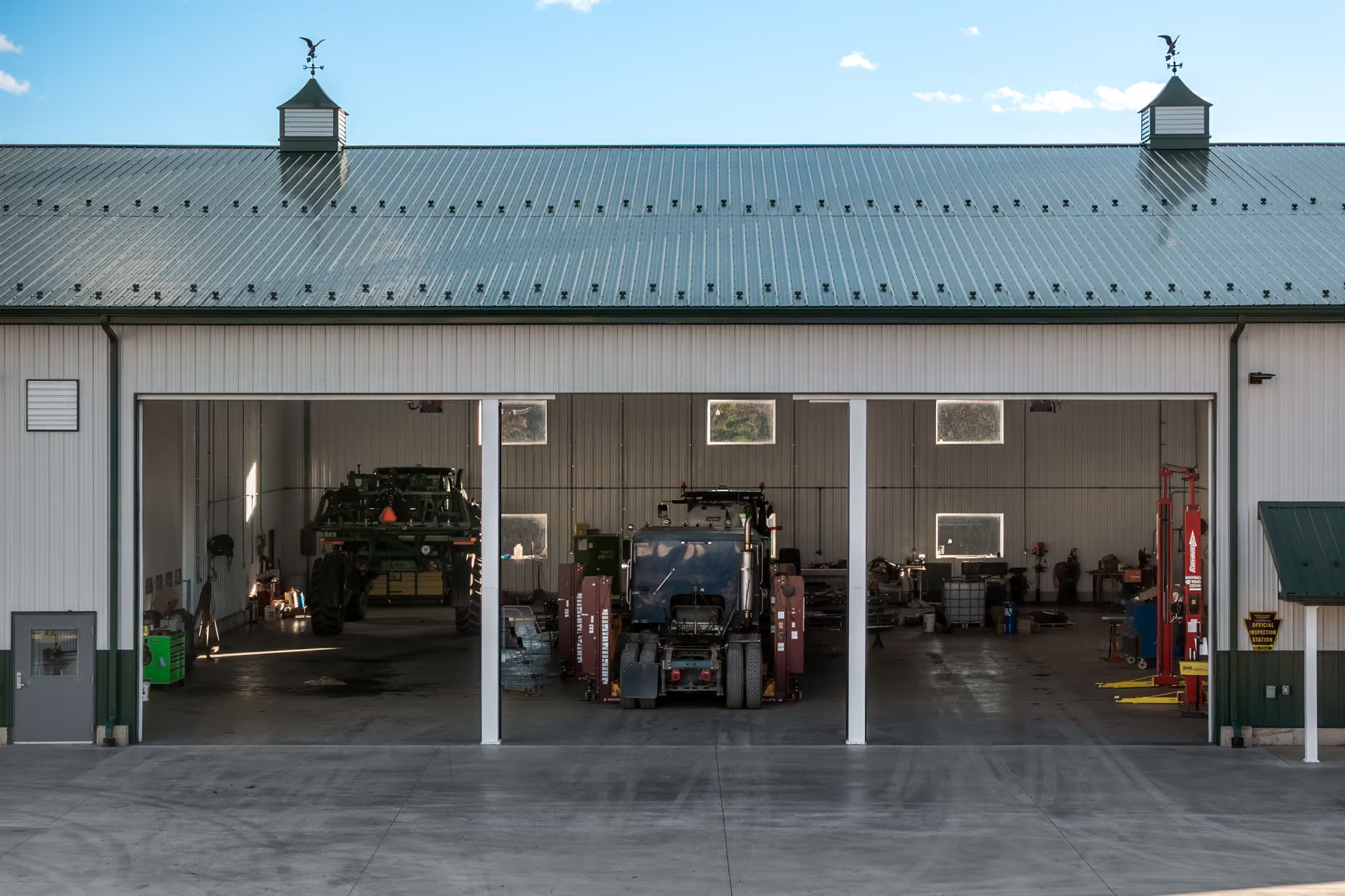
Pine Hurst Acres dreamt of a comprehensive agricultural facility for handling everything from equipment storage to grain operations. To achieve this, we worked together to design and build a 100' x 180' x 22' post-frame building that maximized vertical and horizontal space.
The Pine Hurst Acres agricultural facility features:
- [Seven] overhead doors for various operational needs
- Three 20' x 18' overhead doors to handle day-to-day equipment flows
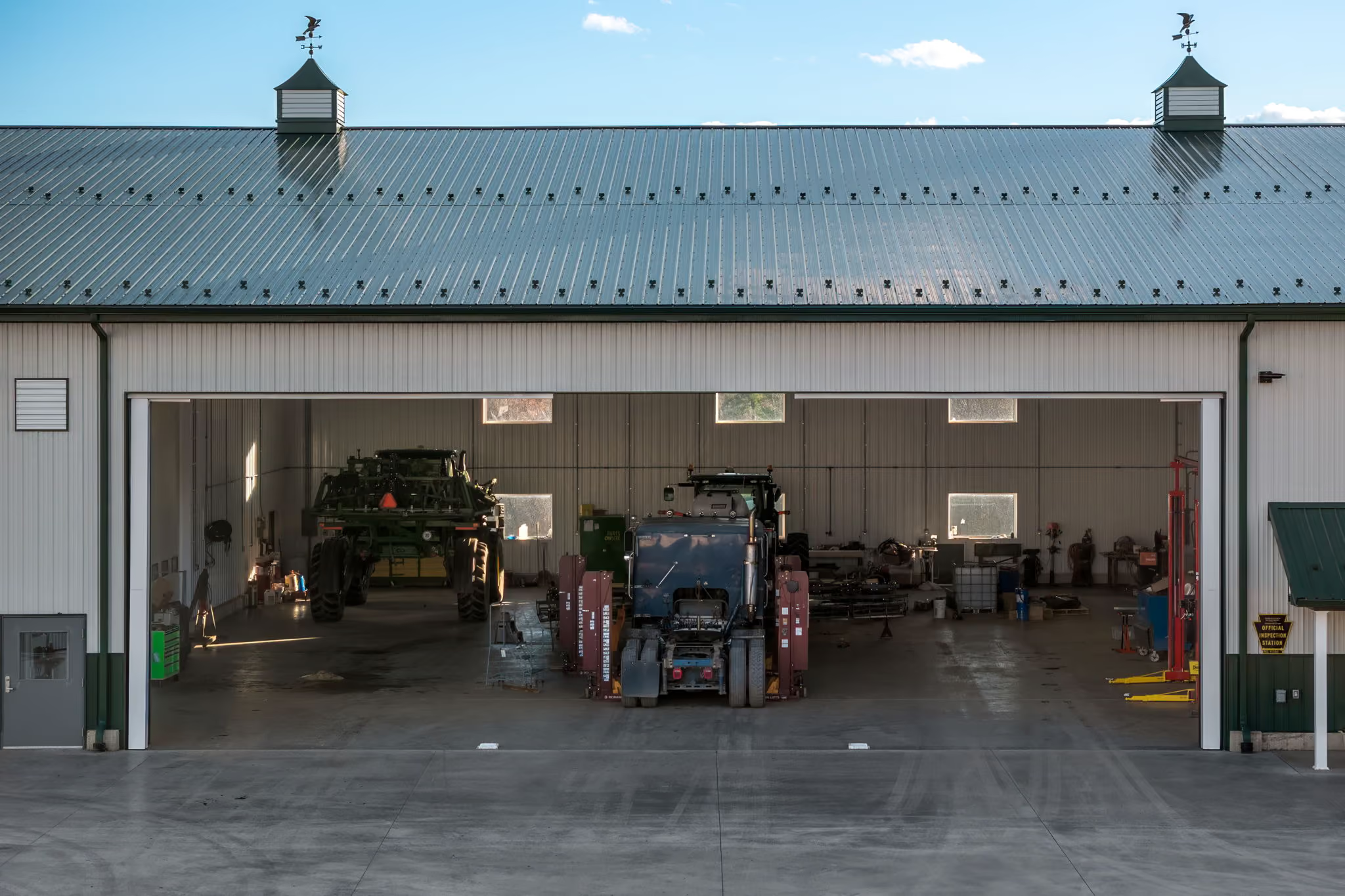
- Three 18' x 18' overhead doors with sliding posts to create a 54' opening for accommodating large machinery
- Three 48" cupolas with weather vanes that provide continuous ventilation
- Two railed staircases for ensuring safe access to the mezzanine
- Generous 24" overhangs to protect operations in inclement weather
- A 6' x 20' front porch to prove hardworking buildings can have curb appeal
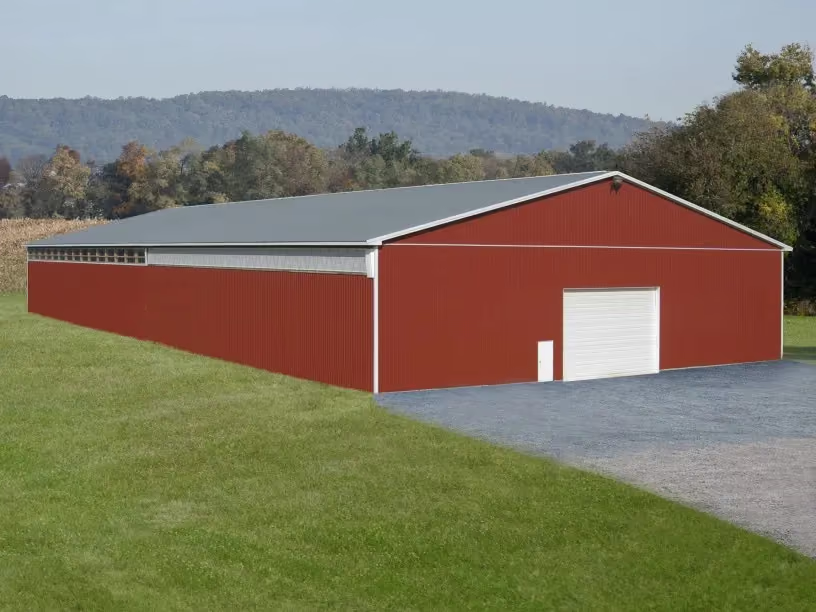


Ready to Upgrade Your Farm Equipment Storage? Go High and Wide with Tristate
Tristate Buildings has been helping farmers improve their operations for over 35 years. And over the years, one of the biggest complaints we hear is this…
"I wish I had gone bigger!"
It's no wonder why. Wider clear spans improve storage options and chore efficiency while lowering the long-term costs of farm expansion. A wider building is an investment worth exploring today.
To take the first step, reach out to Tristate Buildings today. With a specialty in high and wide agricultural structures (up to 100' clear spans and 30' ceilings), we're ready to partner with you and help make your farm an even greater success.
And with every aspect of your building coming with a Lifetime Workmanship Warranty, there's no need to hesitate on expanding your farm. Instead, get the space you need with a free quote and initial consultation today.
Financing Your Dream Building
Finding the right contractor can mean the difference between getting a building you love and spending a bunch of money on a project you later regret. But that doesn’t mean it needs to be a difficult decision.
See options